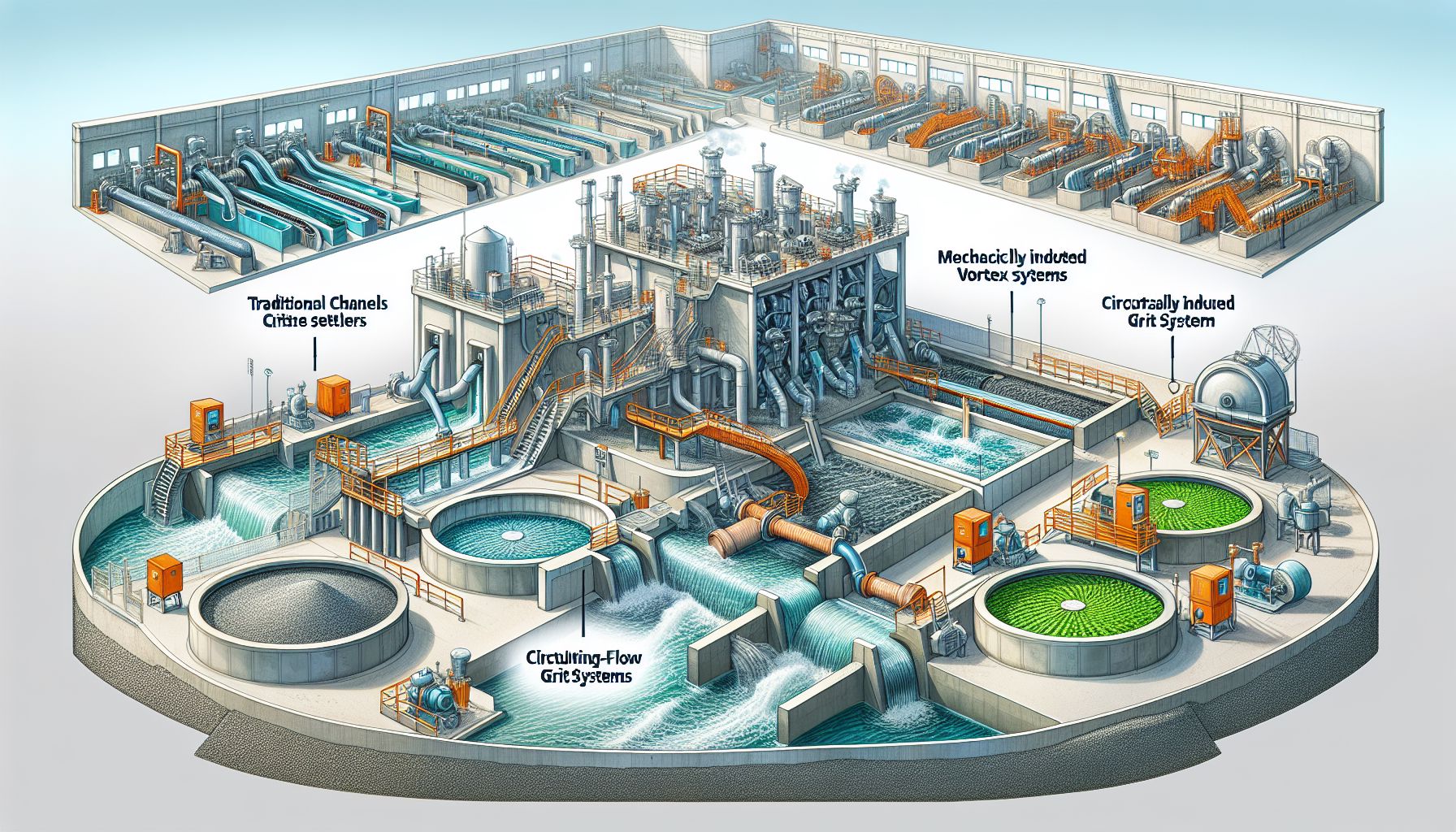
Wastewater treatment plants harbor a diverse and vast volume of waste materials. Among the most challenging to handle are sedimentary substances, commonly called grit. To combat this issue, grit removal systems play a crucial role. So, how do you choose the right system for your wastewater plant? This article will provide valuable insights for determining the ideal grit removal setup for wastewater plants.
Understanding Grit Removal
Before heading into decision-making, let’s first understand the what and why of grit removal. Grit is a general term that encompasses various small, solid particles, including sand, fine stones, and silt. These particles can pose serious operational issues for wastewater plants. With potential to damage equipment, lower overall plant efficiency, and increase maintenance costs, grit’s impact is undeniably harmful.
Grit removal systems are thus essential for minimizing these problems. Designed to extract grit from incoming wastewater, a well-chosen system reduces wear on plant machinery, cuts costs, and enables smoother processing. A detailed explanation of this process is available at Water and Wastewater.
Key Points in Selecting a Grit Removal System
Choosing the appropriate grit removal system hinges primarily on three factors: the type of grit present, most common grit size, and average wastewater flow rate at your plant.
For instance, heavy and dense grit particles can be efficiently managed with gravitational systems. In contrast, lighter, smaller grit often requires more advanced removal methods like centrifugal separation.
Determining the most common grit size in your wastewater assists in choosing a system that accurately targets your specific grit issue. Meanwhile, your plant’s flow rate is vital as it impacts how quickly the grit is transported and spread within the system.
Examining Different Types of Grit Removal Systems
There are numerous types of grit removal systems utilized in wastewater treatment plants, each with its strengths and drawbacks. The following methods are among the most commonly used:
-
Detritus Tanks: This option relies on hydraulic or mechanical means of agitation to separate and remove grit from the water. Although low-tech and relatively cheap to install, detritus tanks necessitate frequent cleanings, potentially increasing labor costs over time.
-
Grit Chambers: In grit chambers, wastewater is slowed down to allow grit to settle and be collected. They provide excellent grit removal efficiency but take up large amounts of space.
-
Hydrocyclones: Hydrocyclones utilize centrifugal force to separate grit from water. Efficient and compact, these systems are, however, more expensive than other options.
For a comprehensive understanding of different grit removal options, a credible resource is the EPA’s guidelines on wastewater treatment.
Real-World Considerations
Selecting the right grit removal system is not a one-size-fits-all process. It requires a thorough examination of the particular needs and constraints of your wastewater treatment plant. For instance, smaller or densely-built facilities might lean towards space-efficient but potentially costlier solutions, like hydrocyclones.
On the other hand, if you’re dealing with heavy grit particles in significant quantities, the affordability and efficiency of grit chambers or detritus tanks could make them a more suitable choice.
Finally, keep in mind that no grit removal system can guarantee 100% grit-free wastewater. But, by choosing a system that adequately matches your plant’s requirements, you can drastically reduce the presence of grit and its associated issues.
Pros and Cons
As with any operational decision in wastewater treatment plants, selecting the right grit removal system involves weighing the pros and cons.
On the positive side, an efficient grit removal system can save a significant sum in the form of lowered equipment repair costs over time. It also leads to lesser maintenance downtime, boosting your facility’s overall productivity.
However, the initial costs of more advanced grit removal systems can be rather high. Also, each system has some degree of operating expense including power consumption and potential maintenance.
Final Thoughts
The importance of grit removal systems in a wastewater treatment plant cannot be overstated. While the decision-making process can seem intricate, a careful assessment of various influencing factors can guide you to an apt choice. For more insights on this aspect of wastewater management, the American Water Works Association’s manual on Handling, Treatment and Disposal of Wastewater Solids is an informative guide. Remember, the objective is to aim for an effective grit removal system that aligns well with your plant’s operational and budgetary needs.