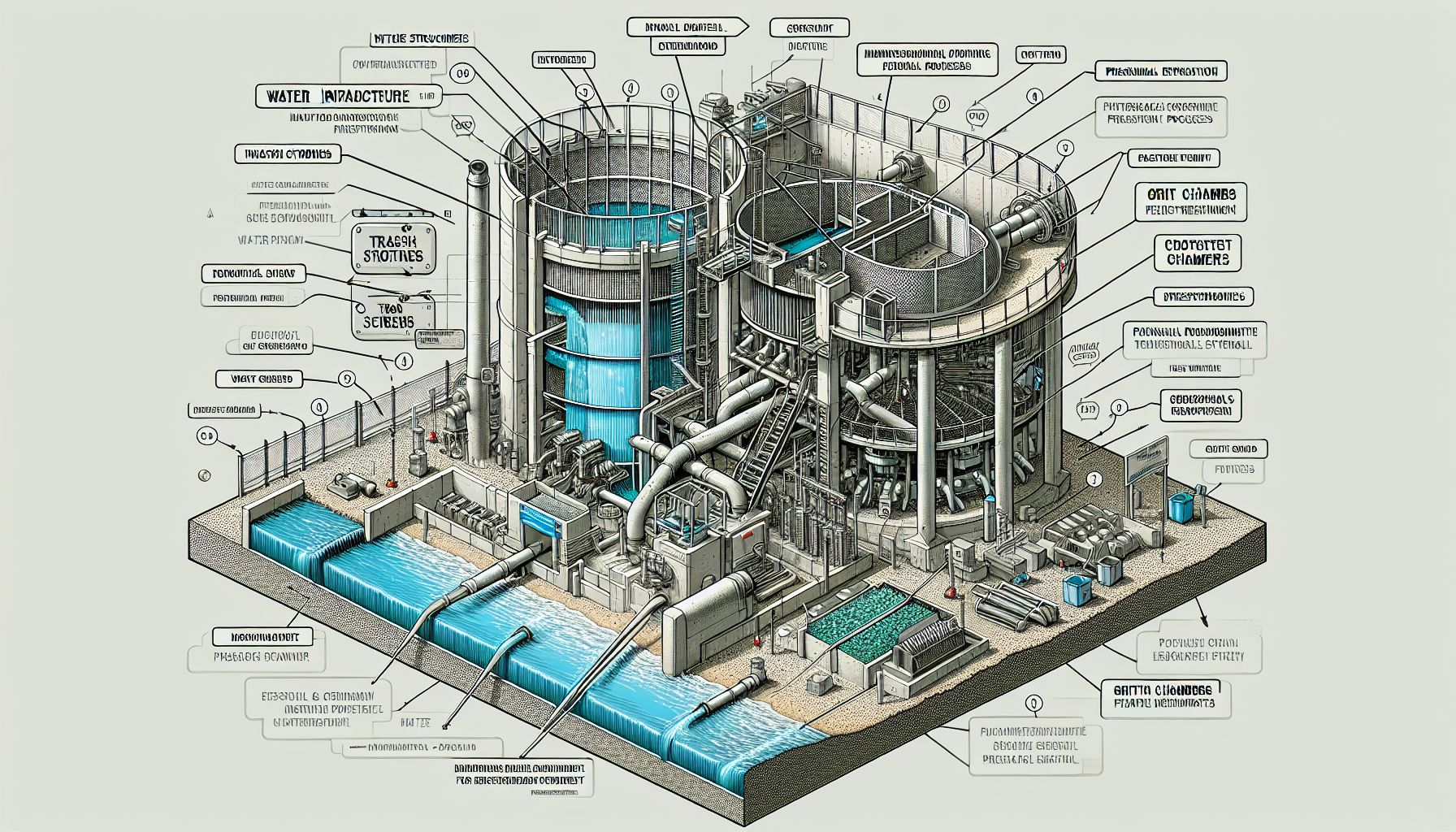
Overview of Water Infrastructure
Water infrastructure refers to the systems built to handle the collection, transportation, treatment, and discharge of water. This water enters the system through headworks and then goes through a pretreatment process before it becomes ready for consumption. Water infrastructure serves as a critical element in maintaining the health of communities, supporting economic growth, and protecting the environment. For more in-depth information on the water and wastewater industry, WaterandWastewater.com is a valuable resource.
Understanding the nuances of utilities related to water and wastewater is crucial. A key component of this understanding is knowing how the headworks and pretreatment stages of the process work.
What Are Headworks?
Headworks, in simple terms, are the initial stage in the water treatment process. They mark the point where the water first enters the water treatment plant. The purpose of the headworks is to protect the downstream processes and equipment by removing larger debris from the incoming wastewater.
In a typical headworks setup, incoming water first passes through bar screens that capture larger solid wastes such as sticks, rags, and other debris. These screens can either be manually cleaned or they may be automated. From here, the water then goes through a grit removal process, designed to take out sand, gravel, and other small particles.
The Importance of the Pretreatment Stage
The water, after going through the primary filtering process in the headworks, then enters the pretreatment stage. This stage is critical because it carries out the first set of treatments to reduce pollutants.
Modern pretreatment often involves chemical addition (often coagulants) that react with the smaller impurities not already removed by the headworks. The reactions cause these impurities to clump together and become easier to remove.
In many cases, sedimentation tanks are also used to allow the reacted impurities to sink and be separated from the water. These tanks are typically engineered for efficient removal of the coagulated particles without re-suspending them into the water column.
Operational Considerations For Headworks and Pretreatment
Different operational considerations come into play for headworks and the pretreatment stage. For example, regular and proper maintenance of the bar screens is vital. Issues can arise if the screens are not cleaned regularly or if excess debris builds up. This can slow down the water processing rate, cause damage to downstream equipment, or, in extreme cases, cause flooding within the plant.
On the other hand, pretreatment requires a keen understanding of the local water chemistry. Knowing how much and which coagulant to add is crucial in the process. Moreover, there must be regular monitoring of the sediment tanks to ensure efficient settling and removal of impurities.
Economic Implications and Environmental Impacts
The efficiency of the headworks and pretreatment stages can have significant economic implications, primarily in terms of operational costs. For instance, frequent breakdowns due to poor maintenance could result in costly repairs or replacements.
From an environmental perspective, efficient headworks and pretreatment are essential. They serve as the first line of defense against pollutants entering water bodies such as rivers, lakes, and oceans. This ensures the protection of aquatic ecosystems and downstream water users.
The U.S. Environmental Protection Agency (EPA) offers several resources to help identify best practices for the economic and environmental management of water infrastructure.
Conclusion
In summary, the headworks and pretreatment stages play vital roles within the broader scope of water infrastructure. By understanding the functionalities and the potential challenges associated with these stages, as well as the possible economic and environmental impacts they might bring up, professionals in the field can make informed decisions. By doing so, they contribute to the goals of maintaining safe, reliable, and efficient water services that are, as the American Society of Civil Engineers put it, the lifeblood of our civilization.